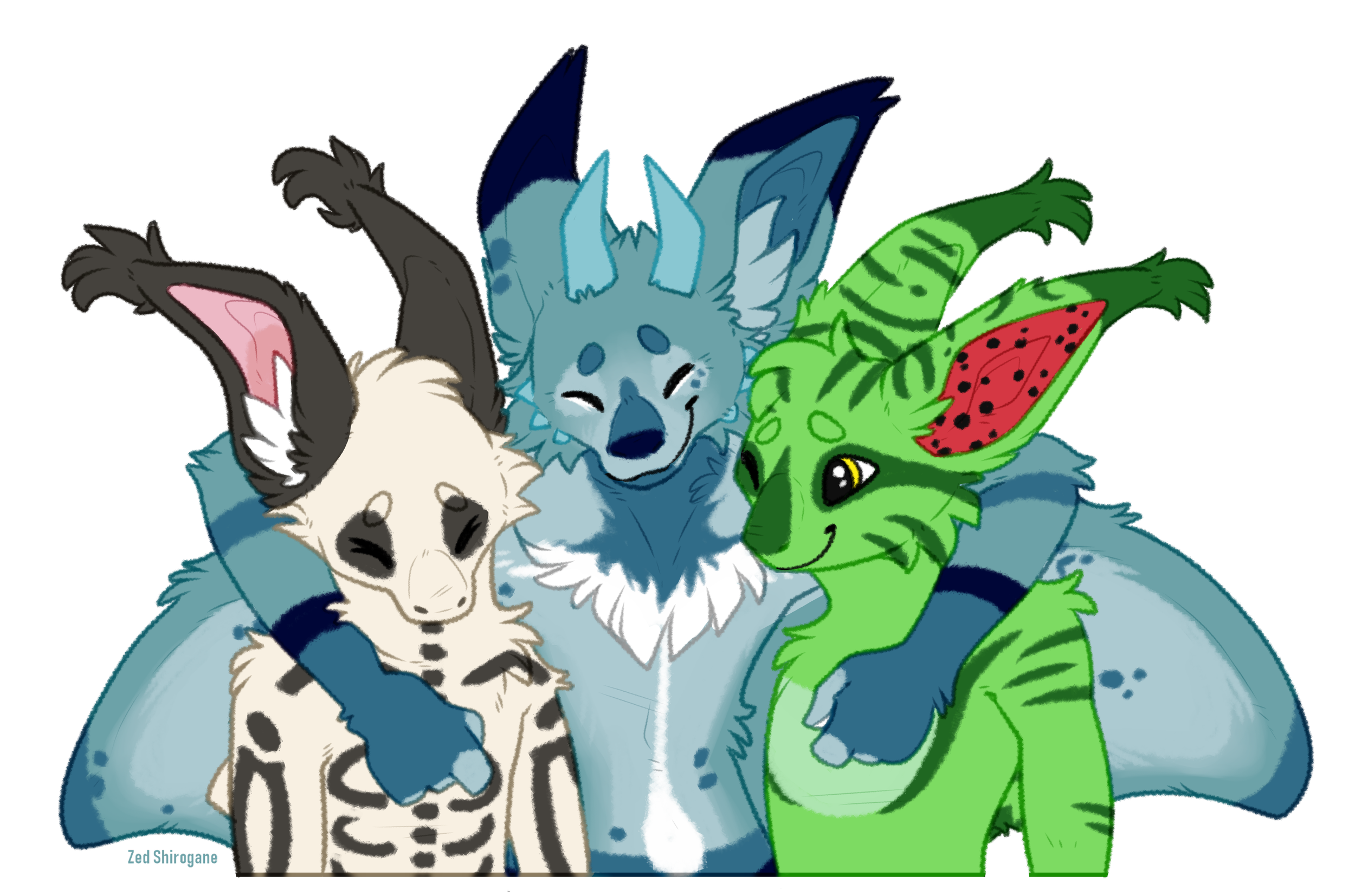
The Official Manokit Species Guidebook
This guidebook has been updated as of February 12th, 2026
Manokits are a fantasy anthropomorphic creature species that appears to be a combination of aquatic and mammalian animals. They live on a remote island chain bordering the North and South Pacific Oceans called Makuashima or “Mother Islands”, within the current human timeline on Earth. They are a spiritual group of beings that worship a trio of deities which bestow blessings onto different individuals. The species is split into 3 main groups based on physical, cultural and location based differences:
Beach Dweller manokits that live primarily underwater.
Tribal manokits that live on land, including their Holoholo forms.
Arcane manokits that live within cave systems.
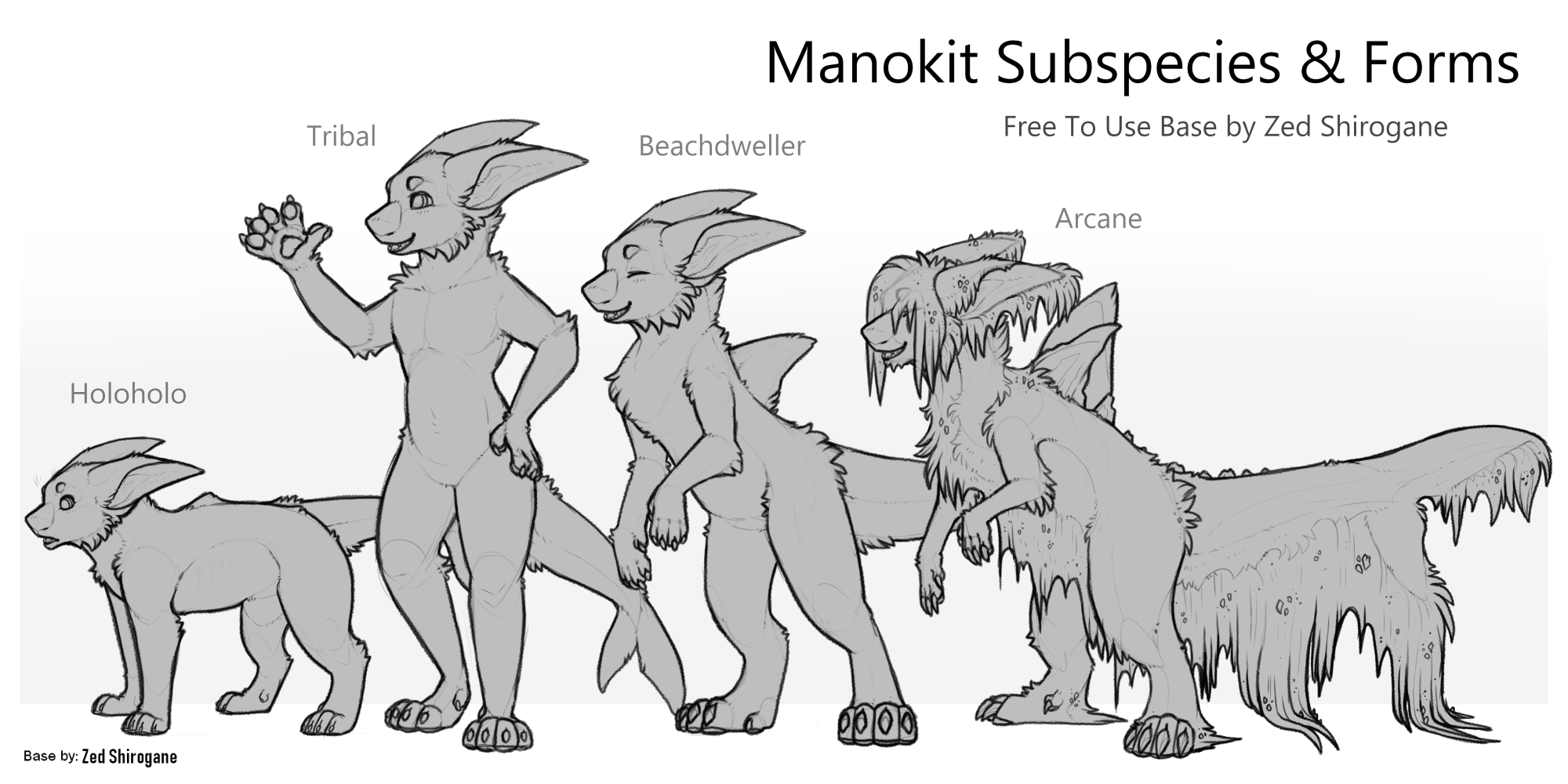
Free To Use base available on Gumroad
Contains 72 customizable layers!
General Appearance & Biology
The teeth of a manokit are shark-like in shape but canine-like in placement, meaning they do not possess molars, or multiple rows of teeth. Despite what their shark based features would suggest. Manokits only get two sets throughout their lives, a baby set and an adult set. Most manokits communicate with animal noises: such as bird-like chirps, dolphin-like whistles, and a series of trills. Depending on the subspecies, these sounds can be used more often than others, similar to dialects of language. Manokits have rounded pupils, with some subspecies being more sensitive to sunlight than others, causing constant squinting or even blindness. Some manokits have horns on their head, with a variety of shapes and sizes.
While manokits can on occasion shed, or molt, such as losing their fluffier coat as a mino (a very young manokit) in exchange for their water resistant fur as they get older. If a manokit is seen lacking in any fur at all, or without fur in certain areas of the body it is usually the result of disease, a sign of extreme sickness, or a case of rogue magic gone wrong, and is certainly not the norm. Manokits afflicted with such a condition often only come out at night, or are seen in heavily shaded areas to avoid the intense sunlight of the islands. Afflicted manokits also avoid venturing out into the sea or rivers for long periods, lest they get wrinkly. Most often treatment comes in the form of intense sunscreen, and fur growth promoting salves.
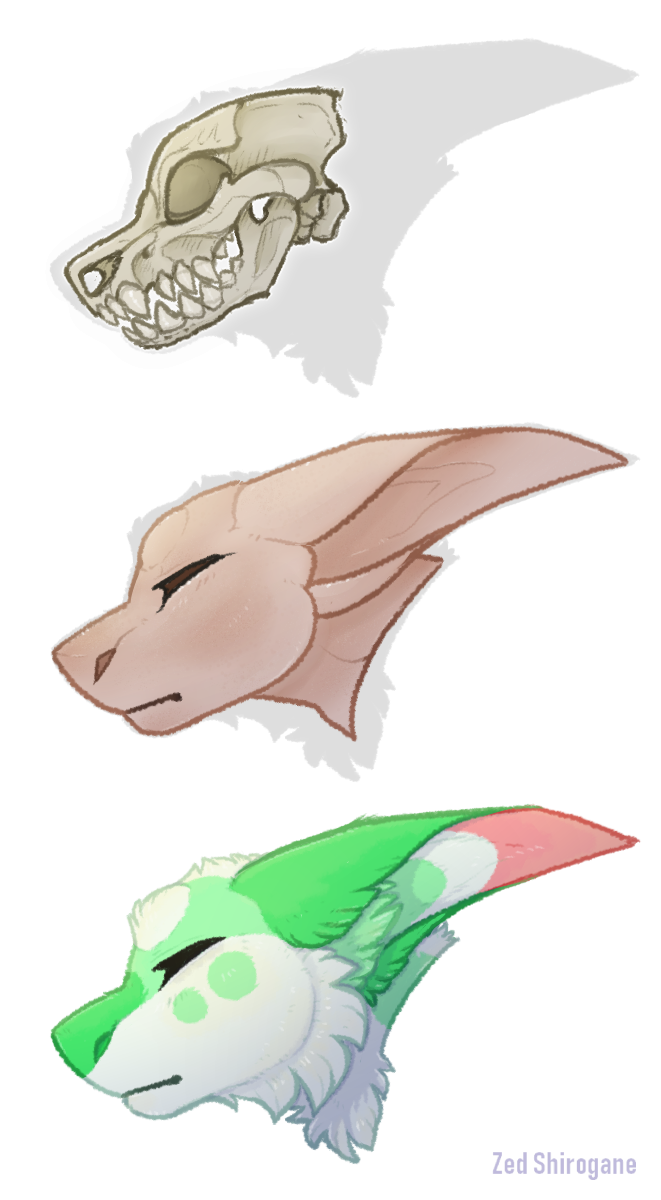
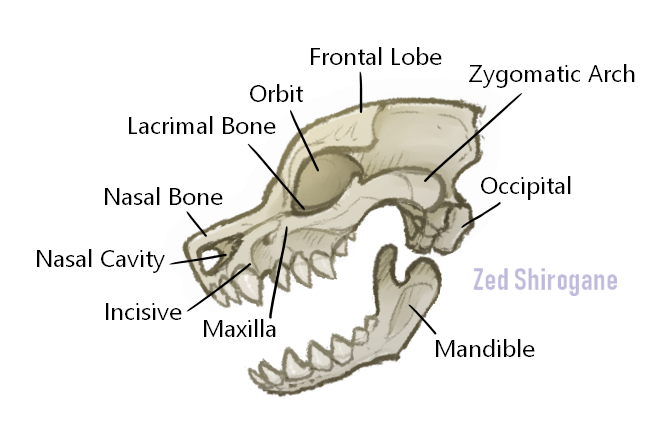
Despite what their unique shark-like anatomy may suggest, manokits do still have bones throughout the majority of their bodies. Their varying fins, large ears, and larger tails are still made mainly of cartilage, muscle, and what you may expect. However, their silhouette defining, pyramid shaped nose ridge is also a direct part of their skeletal structure; unlike other animals where it is made of cartilage. Between the three subspecies, a tribal manokit actually has the least amount of bones. This is due to their shorter tails and occasional lack of a back fin, although their bones are also more dense.
Manokits also have a wide variety of fins, but common between all of the manokits is the fact that the tail fin can only move from side to side similar to a fish rather than an up and down motion like a whale or dolphin. All manokits have a similar face shape and body plan, although posture and fur length varies heavily. Manokits do not have reproductive organs, as they do not sexually reproduce, however some that does not mean they don’t identify as more feminine or masculine than others. Within manokit culture, grooming one's fur is often a way to express oneself: and some manokits fluff up certain areas on their body to reflect if they wish to be perceived as more feminine or masculine by others.
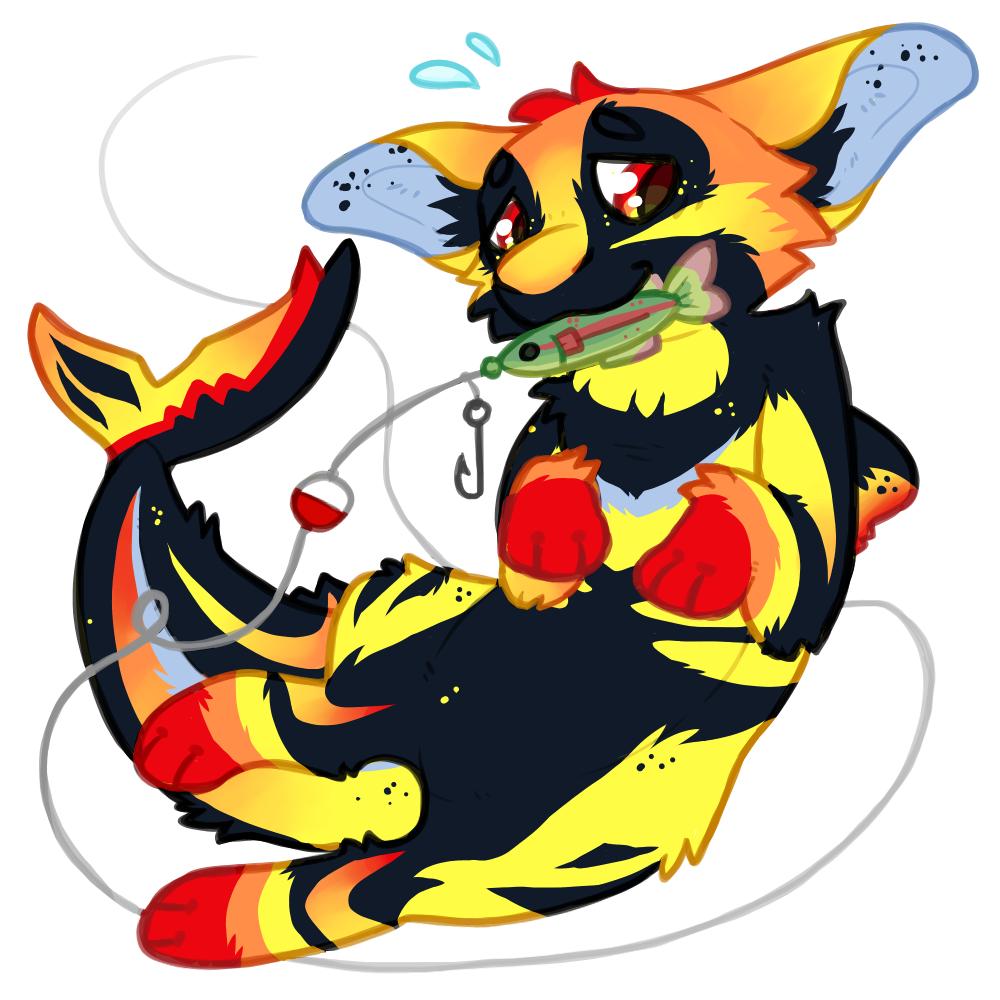
More speculative biology based anatomical infographics and explanations coming soon.
Species Rules & Regulations
These rules are put in place to keep manokits distinct from other original species. Please be courteous of the owners of this species and follow the rules when designing a manokit character. If you do not like any of the rules and wish to disregard them, that is totally fine: we just ask that you do not call your character a manokit, but rather inspired by manokits or just a different creature altogether. Thank you!
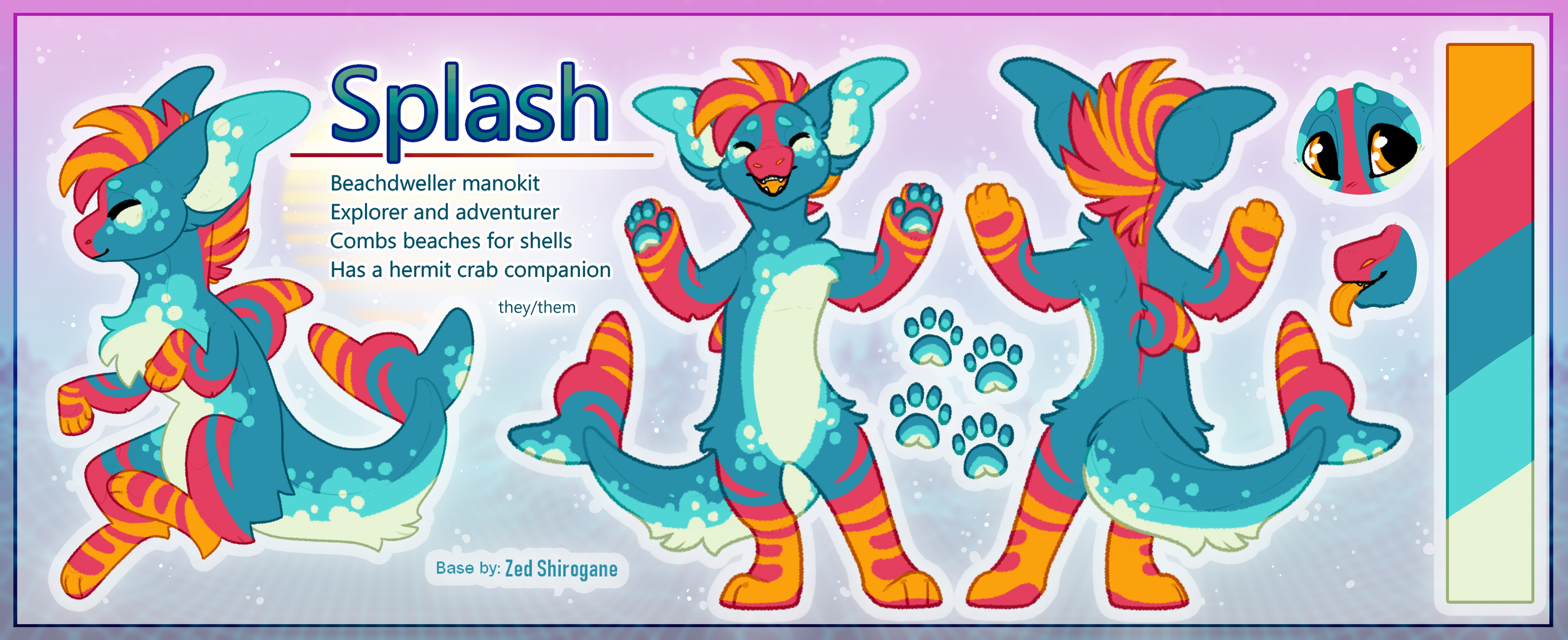
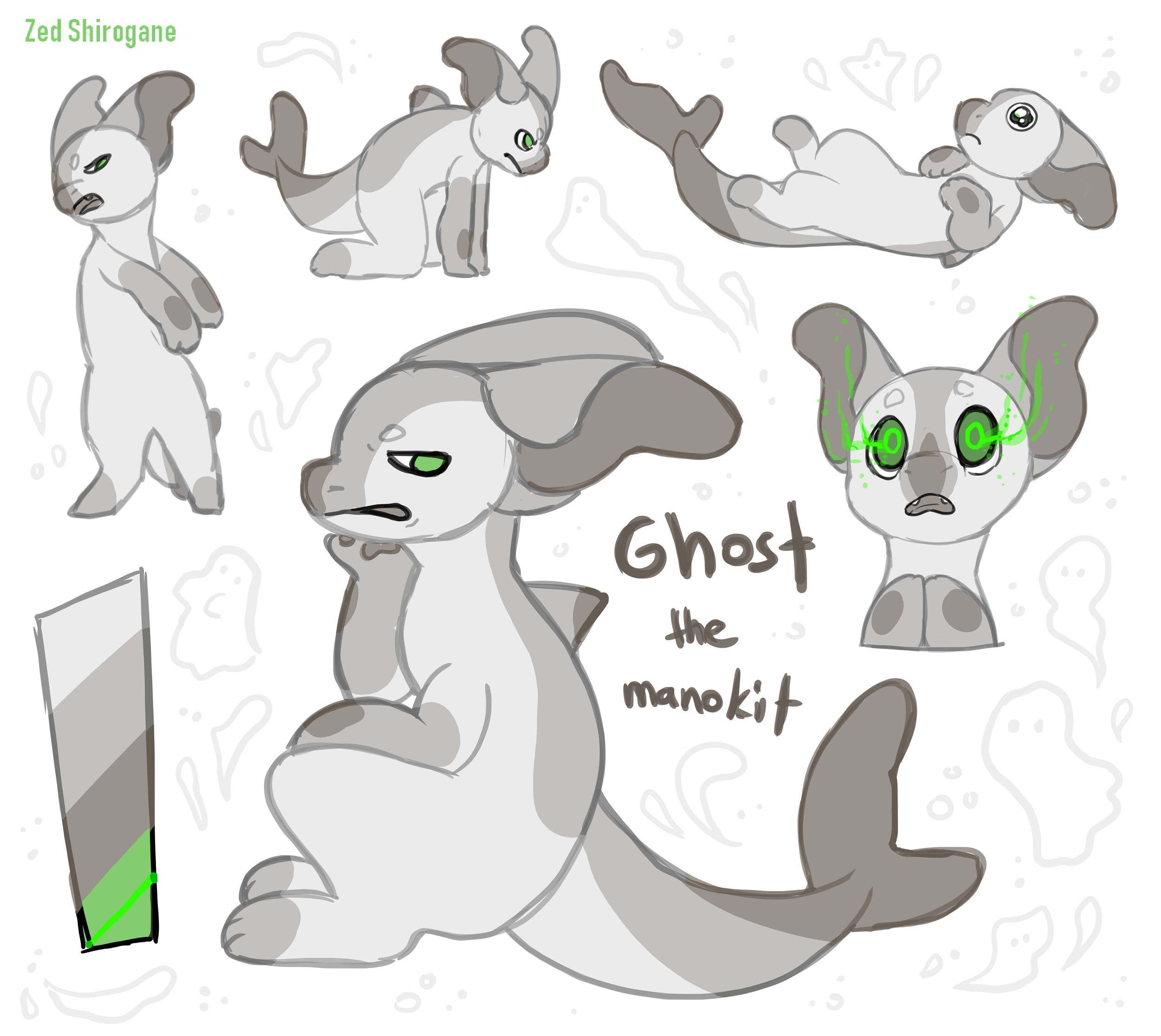
Splash, the official mascot for the manokit species, is a fantastic example of what a manokit looks like!
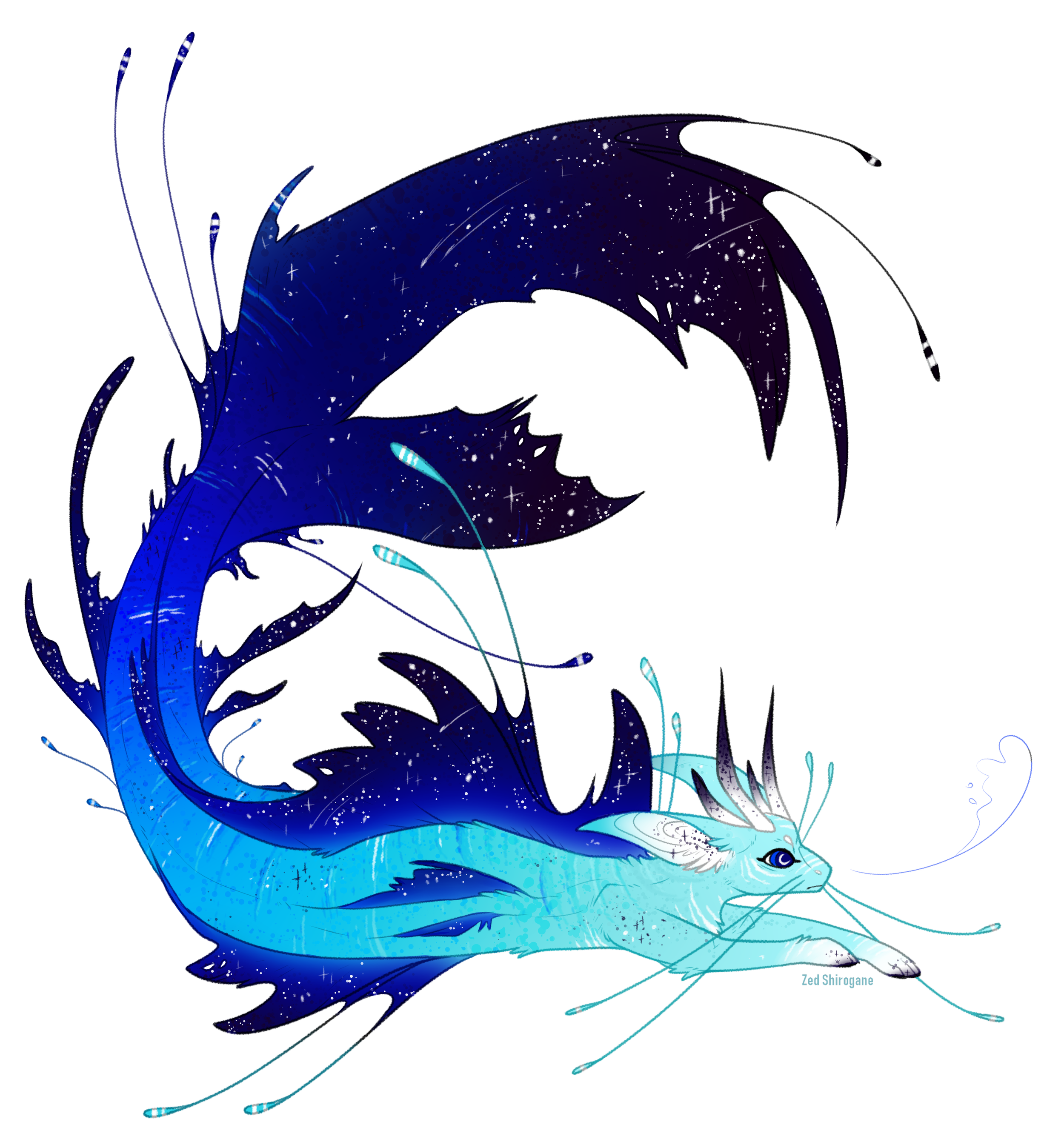
Beachdwellers are the most commonly known subspecies of manokit. They are known for being less coordinated on land as a result of their raptor-like body shape but they excel at traveling in water, using their blessings and tails to seamlessly guide them through the ocean. They are often seen by divers swimming in and playing in large schools of fish, and with other beach dwellers. Despite their name, beachdwellers spend most of their time exploring the ocean floors and thus have exceptional dark vision, though they have poor vision during the day. In fact, to the level they are partially blind and are often seen squinting while in the sun as their pupils are more sensitive to harsh sunlight. It's possible for the eyes of some beachdweller manokits to emit a light glow.
Beachdweller Manokits
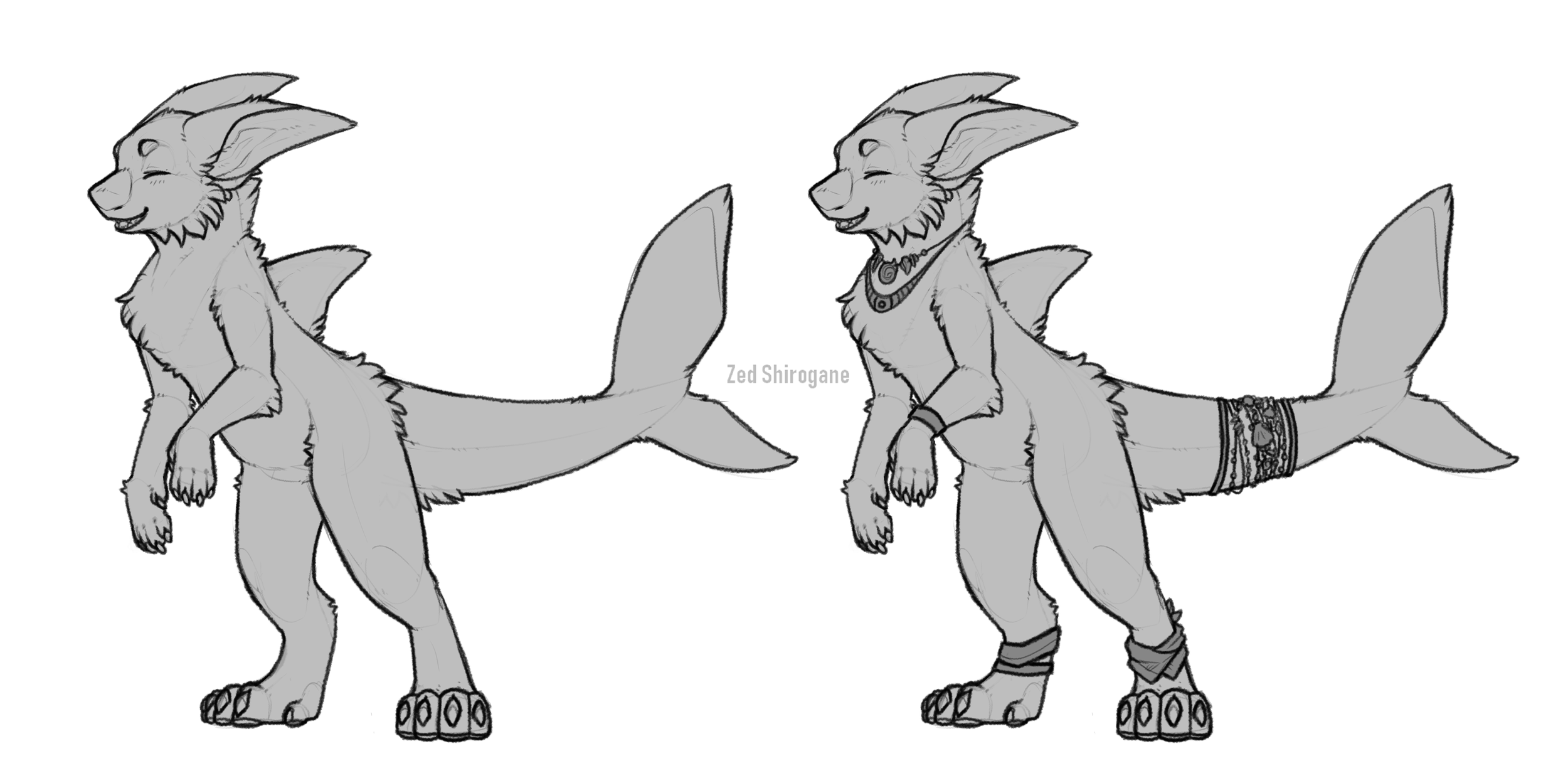
Beachdwellers, while usually solitary or form very small groups called “pods” for hunting and exploring out at sea, often mingle within the safety of the coral reefs. Specifically near shorelines, they can form large social groups called rookeries. These rookeries are where most stories are shared and gifts are traded between beachdwellers and other manokit subspecies. Even in these large groups, families tend to stay close to one another with the exception of courageous little minos who go out to explore and play with other children. Most beachdwellers will spend just over half of their lives out in the open oceans, exploring, hunting, and caring for the wild life. Usually returning to the shallows and rookeries to raise young, attend festivals, or simply for a change of pace. While there aren’t many creatures that would attack a beachdweller manokit in the water, younger minos can be easy prey to a starving and opportunistic hunter, and getting caught in riptides, storms, or underwater cave systems can be extremely dangerous.
Beachdweller manokits are heavily adapted to the underwater environment, and their fur is sleek and dense, mainly used to insulate them while underwater by capturing air in the short guard hairs similar to fur seals. They have larger, stronger tails for seamless underwater steering as well as large sensitive eyes for seeing underwater better. Beachdwellers have gained fish-like traits over the years for better camouflage, to aid in hunting, or just to seem more attractive. Bioluminescent eyes and markings, extra fins, longer fins, lionfish styled frills, betta-fish like tails, large ray like gliding fins, and the like being the most common.
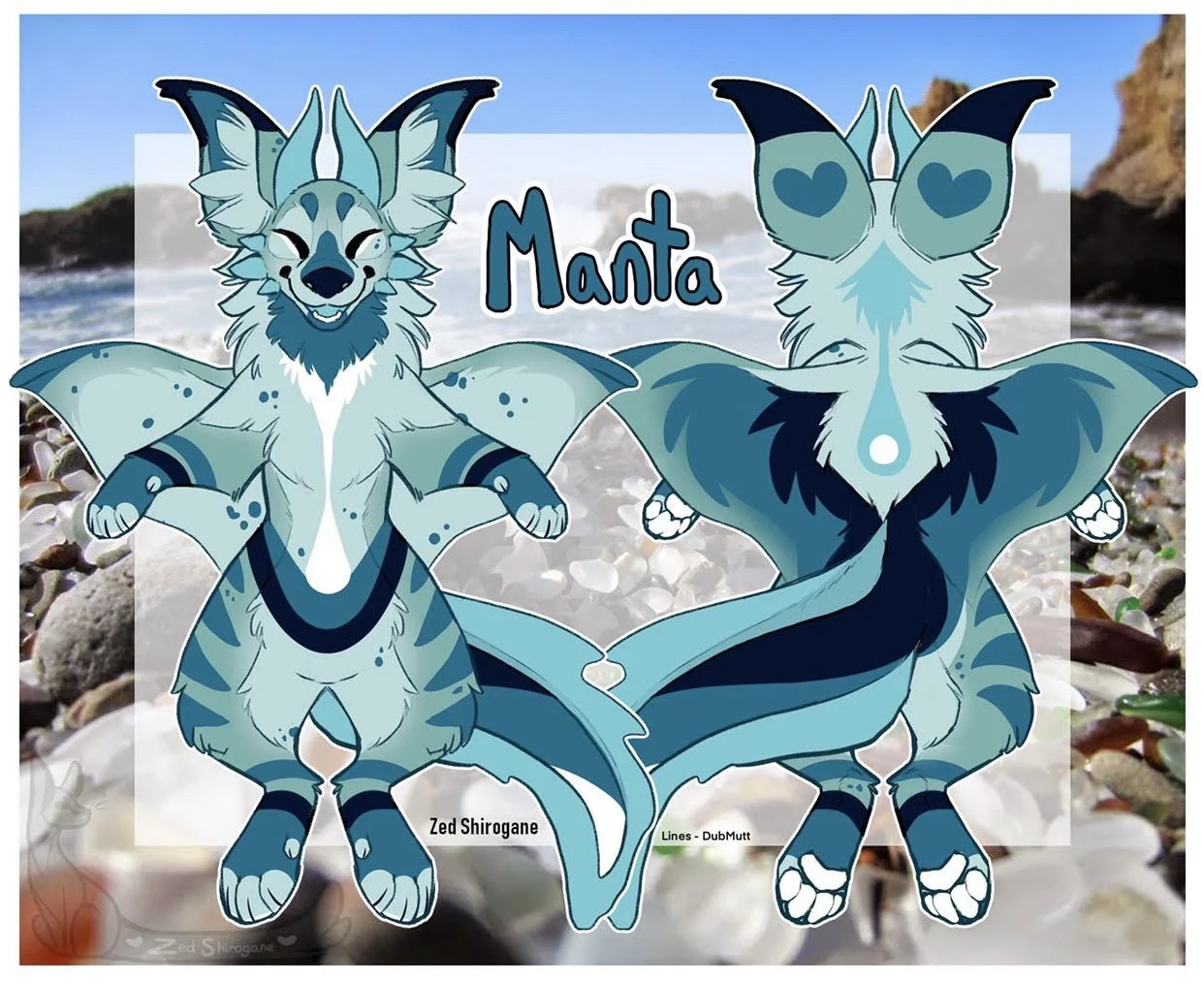
They do not possess gills, as they do not need them; being able to breathe underwater via their blessings. They commonly speak through a series of trills and whistles similar to dolphins and whales while alone and with other beachdwellers, as higher toned calls are clearer underwater than deep purrs, but they can also growl and chuff to communicate with their tribal brethren. They can bellow deep growls for long distance underwater communication, but these calls are harder to pinpoint so are used mainly for warnings/broadcasts.
Beachdwellers average a height of about 4'5 at the shortest to 5'0 ft. While on land Beachdwellers move at a cool -though slightly uncoordinated ~5km/h (just over 3 mph), while in water they can swim consistently at speeds of up to 95 km/h (around 60 mph) They will not get tired from swimming in water but they will from running on land. For their dietary needs they eat mostly seafood with the rare opportunity fruit, often only coming out of the water and their reef to satisfy their incredible sweet tooth or to interact with others of their kind. It's worth waddling onto the beach if there is a chance at getting your hands on a pineapple! They are skilled underwater hunters, and have a preference for crustaceans and any fish which can fit inside their mouths.
They honor the Goddess Elisan, Goddess of the sea. Elisan has gifted sea dwelling manokits their magic, their ability to hold their breath for hours of time as well the ability to heal and cultivate the ocean life. Her beach dwelling followers praise her and draw from her magic to dive deep into the sea; exploring the ocean depths and collecting long forgotten treasures. At its core their celebrations consist of gathering their most prized collections from their dives to offer them up to Elisan under the full moonlight. They're also known to gather for intricate synchronized swimming during these festivals.
Without the use of their blessings given by Elisan, beachdweller manokits would simply sink as their center of gravity is within their necks- this leads to those with less magical ability keeping to the shores and shallows, but they can still travel out on rafts or with flotation devices. They use their magic primarily to better the oceans and the creatures which live within it, and they are responsible for keeping sea life from steering itself too close to land.
Tribal Manokits
Unlike their waddling beachdweller brethren, tribal manokits walk and stand much more upright and they are better coordinated on two legs. This however makes them very weak swimmers. Primarily keeping to the forested and mountain filled areas of the mainland. these manokits possess an incredible ability to climb. Most often they will travel either solo or in small hunting parties, using simple tools they create to asist: like nets, traps, cages and fishing rods.
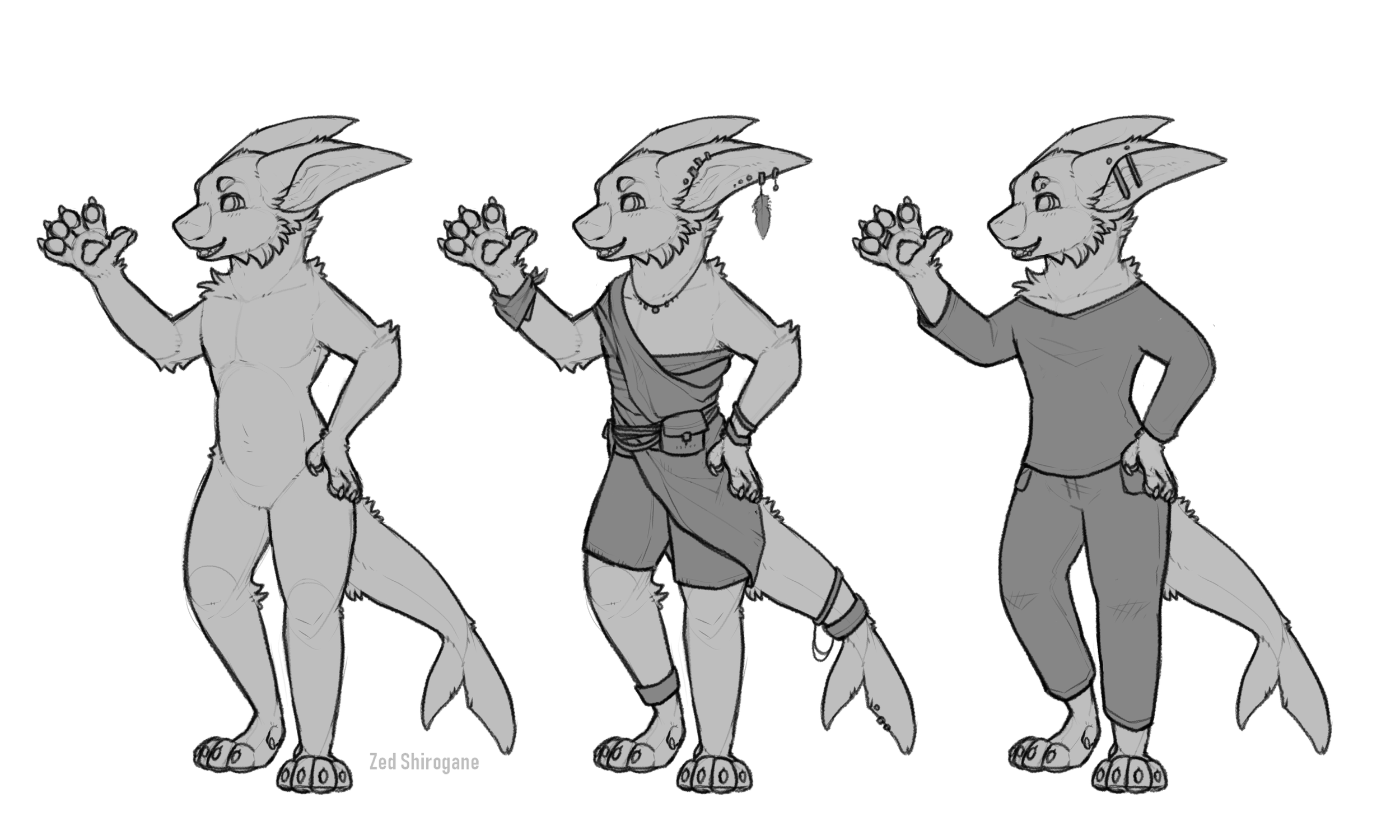
Unlike the beachdwellers, they have incredible vision during the day, but poor vision during the night. Their night vision only slightly improved within their feral form, called holoholo. They have similar eyesight to humans, allowing them to see in high levels of light but not directly at the sun. They communicate in a wide series of melodic chirps and chuffs, often compared to and confused with large exotic birds or parakeets. However they are also able to trill to be able to communicate with beachdwellers, but they rarely will within their own company. Tribal manokits do not have the same water dwelling features such as extra frills and fins as beachdwellers due to their ecology. As a result, they have naturally shorter and smaller tails and back fins, with there have even been some cases of tribal manokits having no back fin at all; though this isn't a common occurrence.
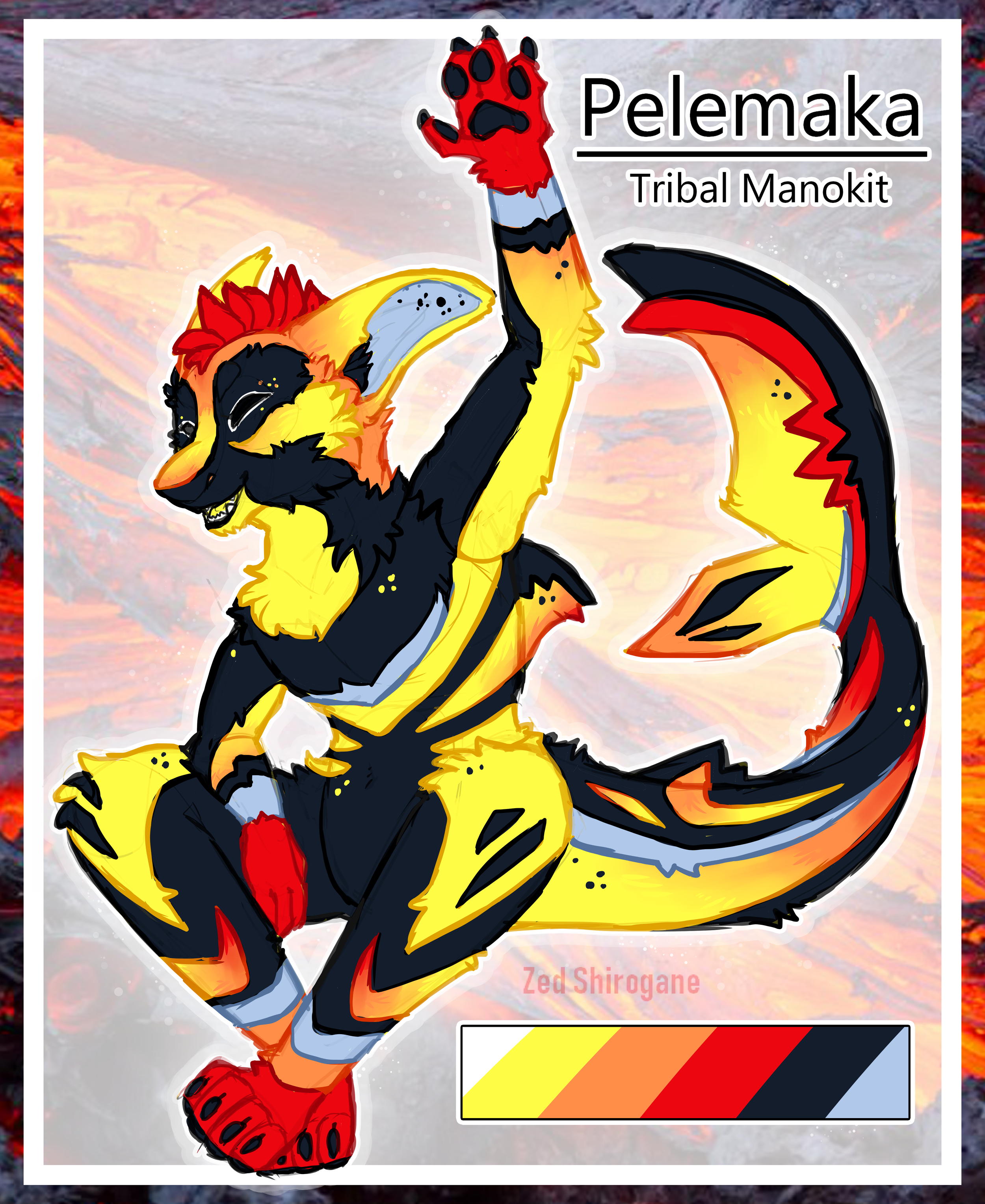
Standing tribals are able to reach a maximum running speed in their bipedal form of 24 km/h (up to 15 mph) They average between 5'5 ft and 5'0 ft. Hunting and rod fishing being skills which they excel at, some highly prized individuals can even be on par with beachdwellers. They primarily eat seafood, other smaller game such as rabbits and the occasional small bird, and fruit. Although they lack a beachdweller's natural sweet tooth. For festivals they may even band together to hunt for wild boar. Tribal manokits are druidic in nature and they use their own magic to better the world and islands around them.
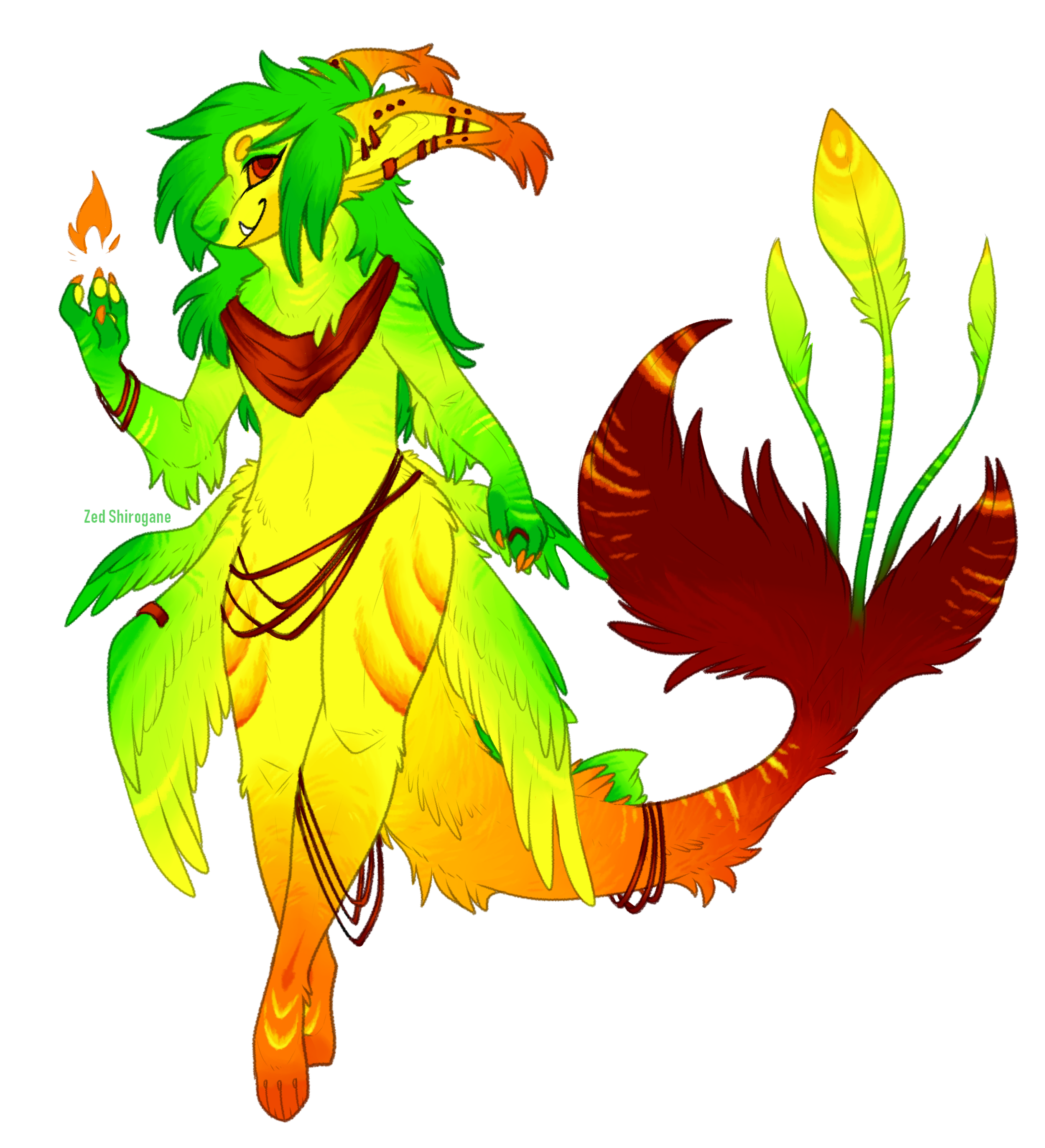
They frequently host celebrations with neighboring tribals to honor the Goddess Yuliasha, Goddess of the earth. Their celebrations consist of tribal members meeting in a centralized location (usually the highest point in the region they're located) and bringing exotic fruits and trinkets to trade amongst each other, as well as large feasts. Tribal manokits idolize her for the magical gifts she grants them; as well as bend nature to heal themselves and others. Tribal manokits are incredibly artistic and skilled in their craftsmanship, and they are able to create paints from a mixture of crushed berries, shells, and plant material, as well as simple clothing, jewelry, and ceramics. Those that hone their craft are even able to make prosthesis for their injured brethren from materials such as bone, wood, driftwood, clay, coral, cloth, and hide. They will often share their creations with beachdwellers in exchange for rarer shells, pearls, pieces of coral, or harder to catch fish.
Holoholo Form
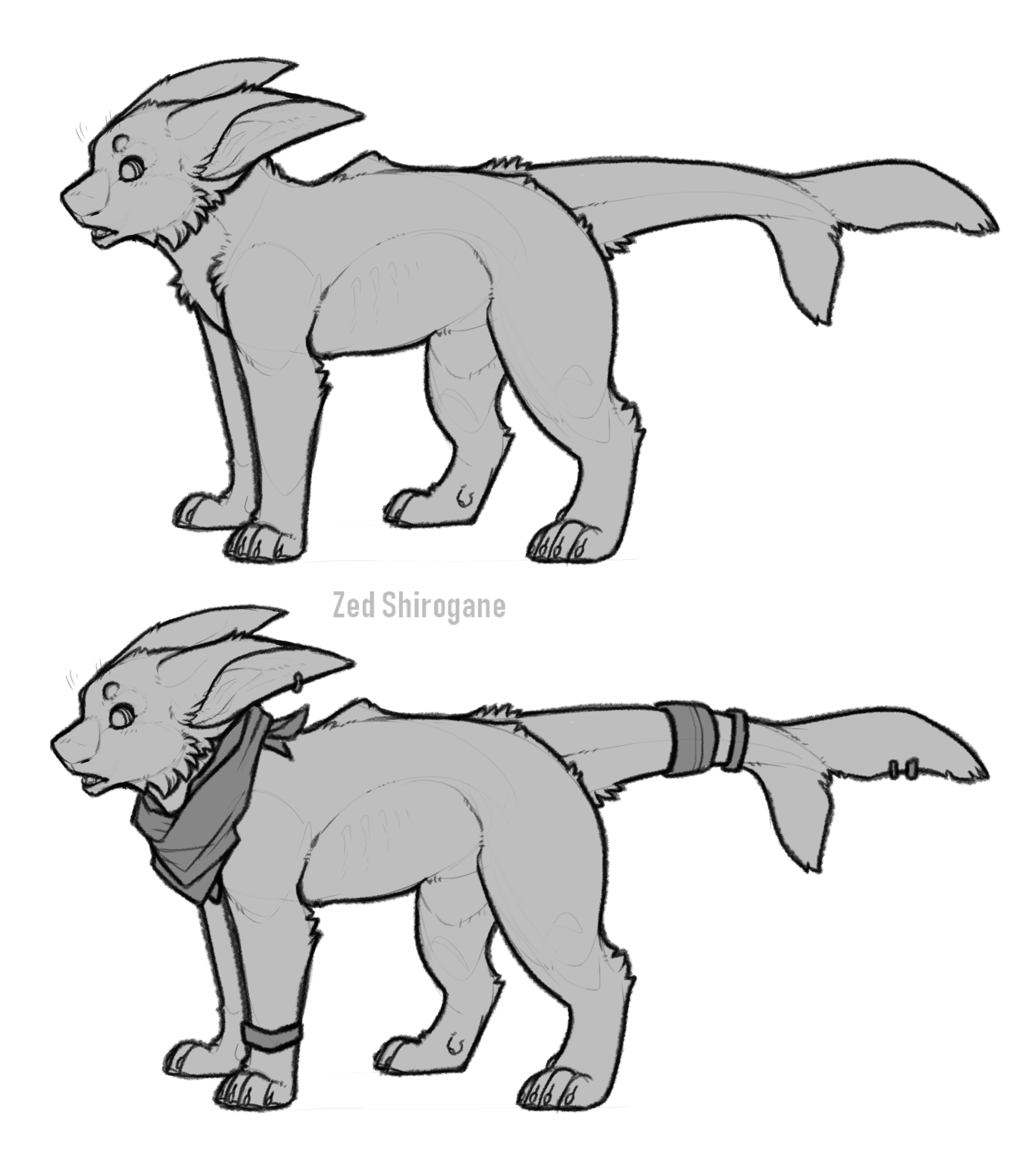
Unique to the tribals because of their relationship to Yuliasha, they are able to shapeshift into a 'Feral' or four-legged form for faster travel across their island. This form strictly walks and runs on four legs. The magic in this form is incredibly specialized to maneuver around the island, able to run faster or jump higher. Holoholo form manokits keep all existing features of their tribal form, including pattern and horns. They do not keep clothing as it can impede their movements, but simple accessories like piercings and necklaces remain in the same spots. They share the same diet as their tribal form, but vocally they are closer to beachdwellers.
They are able to run at a max speed of 95 km/h (60 mph) and they are quite a bit more agile than they are within the tribal form. The Holoholo form is the shortest among all three forms of manokit, standing only at 3 feet (1 meter) while on all fours.
Arcane Manokits
Arcane manokits are easily considered the shyest among the subspecies, rarely leaving the cave systems they call home, beyond festivals where all are involved or the occasional trade. They are rather distinct from the other subspecies, being the only ones to possess much longer fur along their ears, chests, stomach, and tails. As well, they are easily recognized by the crystals which cover their bodies, each possessing their own different and unique abilities. Most often being heard first by a pleasant chime-like noise when they walk or run. Although, the different effects of many of these gems combined can at times be a bit unstable and can lead to undesirable unfortunate conclusions.
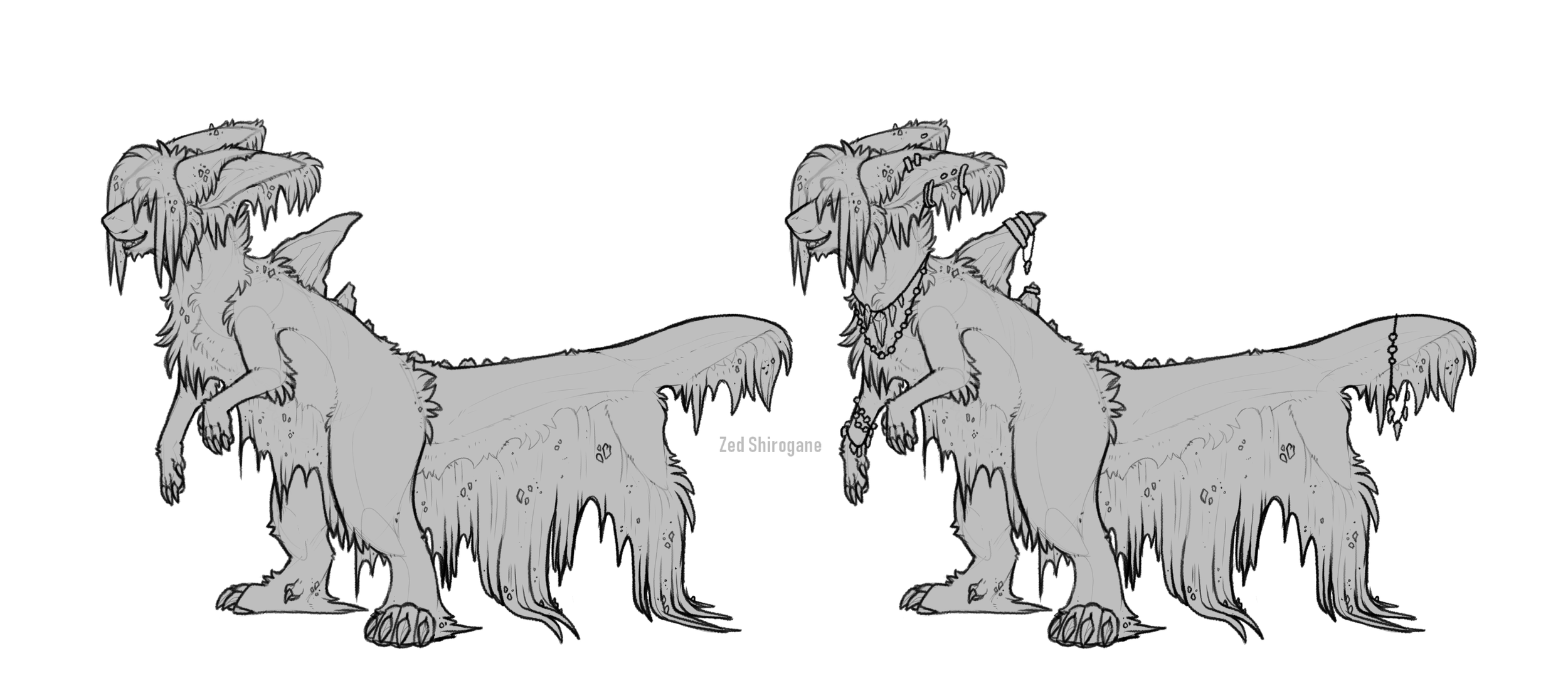
If the gems in the fur of an arcane manokit ever become too heavy, the larger crystals can be cut from the fur and either sold and traded as is or used to make ornaments, small instruments, and figures, most often passed on to family; be it direct or chosen. Though, this is typically avoided unless it becomes an issue of mobility.
Pendants or trinkets made from arcane manokit crystals have become a trade item between the three subspecies during festivals, or for specific offerings. The effects of these condensed magic crystals can vary. For example, when worn, a beachdweller may suddenly gain a sudden burst in speed while swimming, or a Tribal becomes stronger or faster temporarily. Some of these crystals are highly sought after from other manokit subspecies, but overuse can cause issues. If a large enough piece of crystal is worn long enough, like in the case of minor prosthetics, the manokit in question may take on more permanent magical properties, such as a change in eye color to that of the gemstone as seen with older arcane manokits, or outbursts of magic that cannot be controlled well. This instability around their gems' magic, in addition to the usual dangers of those inexperienced wandering into deep cave systems, is said to be one of the biggest factors in their reclusive nature. Although not a common occurrence, if the other subspecies are exposed to the crystals long enough, their magic may also become a bit more unstable.
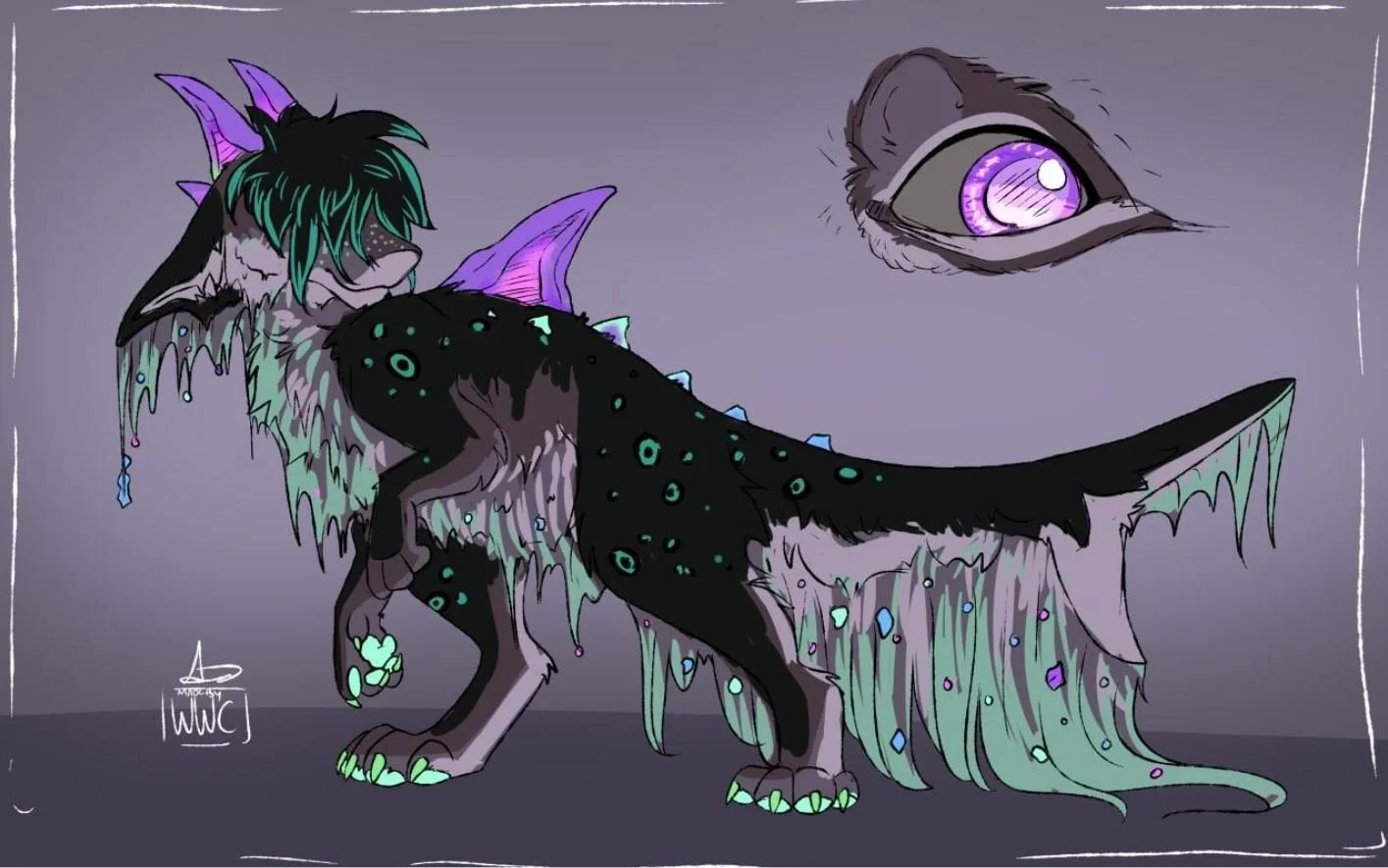
They rely primarily on their tactile senses and hearing for sight and maneuverability, and what little vision they do possess is suited only for the lower light levels of the caves and the deeper ocean crevasses which lead into them. This has led to some younger members of the subspecies developing a form of echolocation unique to themselves, where by reaching a certain speed in their stride, the gems from their tails and ears will resonate with the walls within the caverns, or off of the other gems. Quite a few minos have even tried making games around this concept by hiding and finding certain objects within a time limit. Their diet is omnivorous, the meat in their diet primarily consists of fish, lizards, bats, and burrowing mammals. While they do not share the beachdwellers fondness for sweet fruit, a decent portion of their diet comes from native fungi and lichen, while softer mosses are reserved for things like bedding.
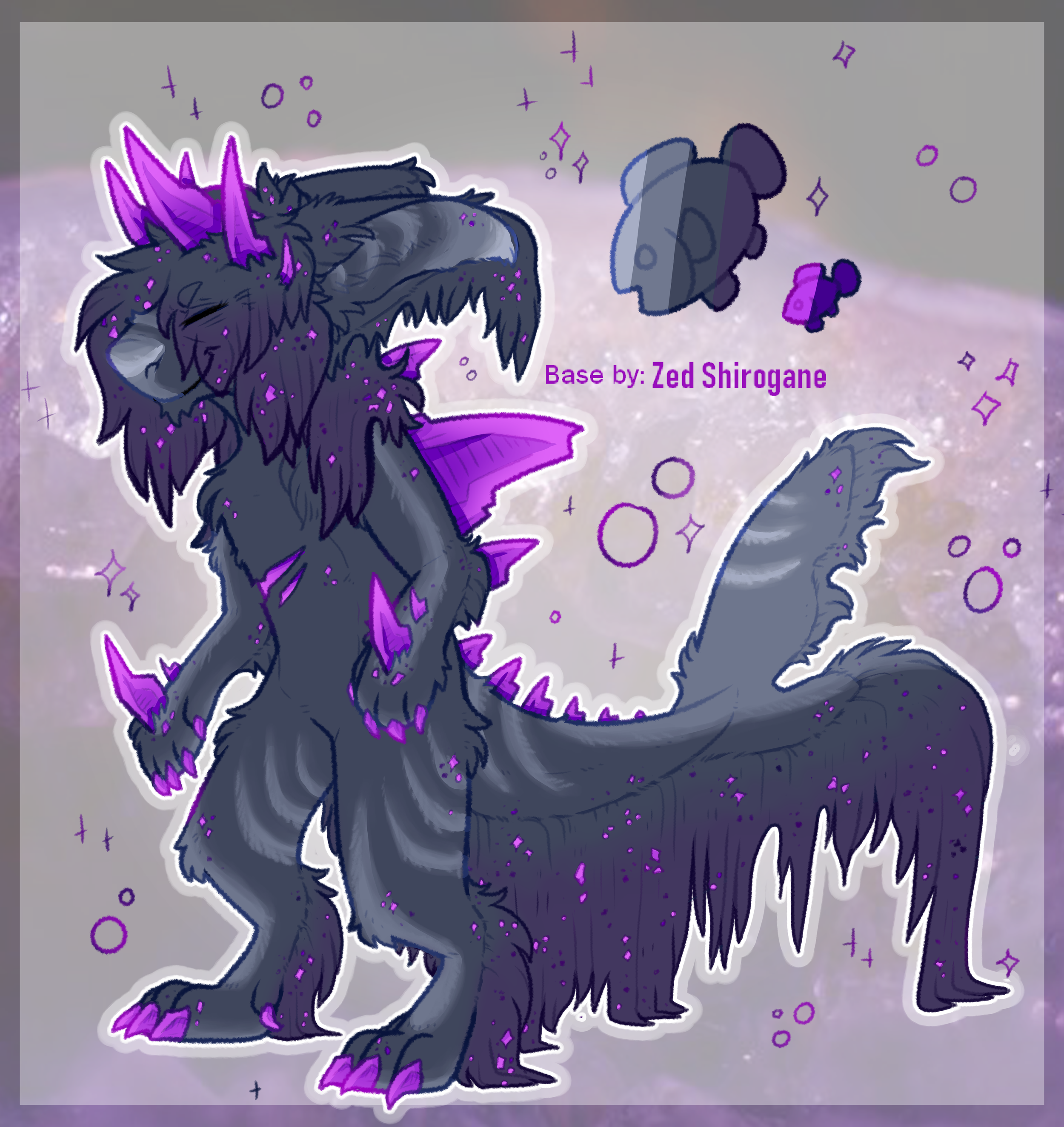
Any natural horn and claw growths tend to become covered in a layer of crystal as they age and spend more time in the waters of the crystal pools, in some strange cases, even their teeth can become coated. Like with trees, occasionally the size and condition of their crystals can also be used to tell their age from a distance, but it's much nicer to just ask. The older an arcane manokit becomes, the more their magic is likely to take on the properties of the crystals covering their body, not only changing the color of their magic over time but possibly other aspects as well, such as their eye color.
Arcane manokits have the greatest size variation among the land-dwelling subspecies. Typically ranging from 4 '0, though still not as short as the Holoholo form on all fours, to an incredible 5 '5 ft not including any horns, as tall as some tribal manokits. Due to the additional weight of the crystals in their fur they have developed longer, thicker fur, stronger leg, arm, and tail muscles. This weight also means they have a much sturdier center of gravity and are capable of running at higher speeds on land than a beachdweller, at about 10-12 km/h (around 8mph.) Though they’re still unlikely to ever beat a tribal manokit in a race.
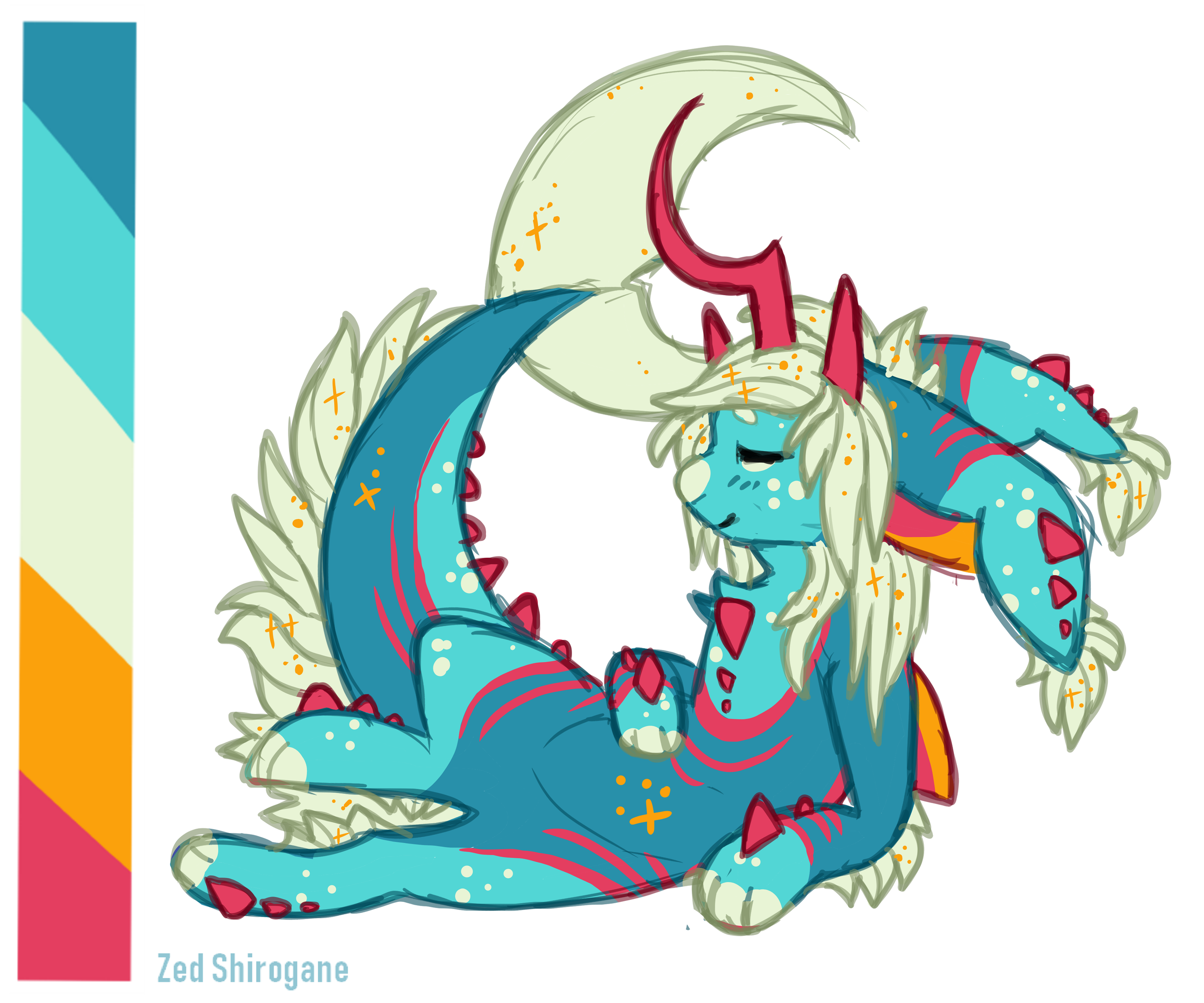
They honor the God Melos, God of music. Although not as commonly worshiped as his elder sisters, Melos' gift to the arcane manokits is their more advanced hearing, knack for tunneling, as well as their increased magical ability. Due to being seen rarely on the surface outside of their own festivals, both beachdwelling and tribal manokits seem to have their own explanation for how their arcane brethren first came about.
Their festivals have a much larger basis in music than those of their land and sea dwelling brothers, though all three still give offerings at specific times of year. You can always tell when it's time for their festivals as music seems to pour from the peak and the very heart of the mountains, thanks to the incredible acoustics of the caves.
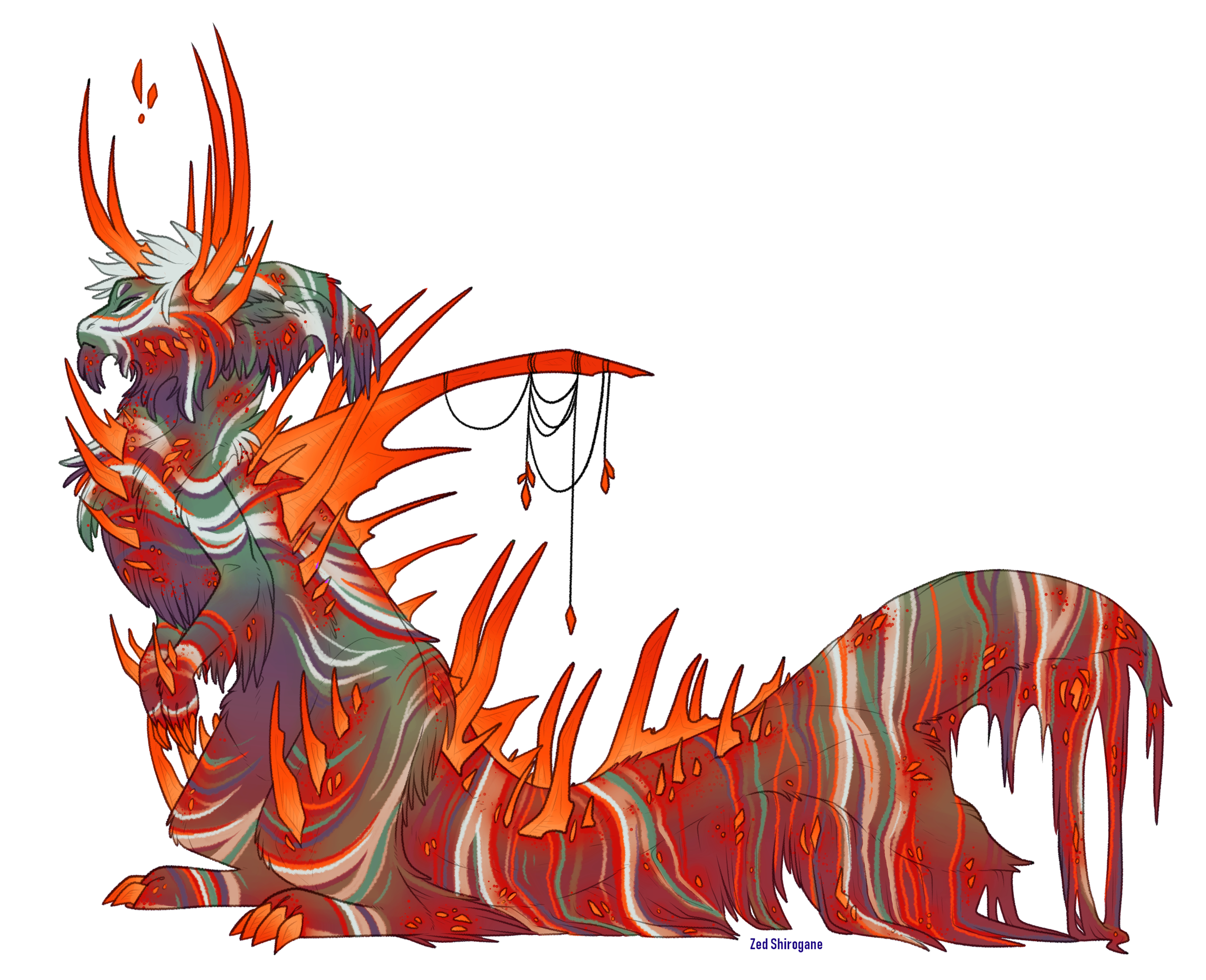
During these festivals, intricate- though often quite fragile instruments are carved from larger, safer crystals and are played alongside the chime-like melodies created by the gems growing along their fur. These instruments can be played alongside the use of water, as a stand alone wind style instrument like a flute, or as simple percussion.
Reproduction
The young of both species are referred to as minos (pronounced like the fish: minnows). Reproduction for manokits, as with nearly every creature, begins with two or more living beings: although it matters little how they choose to identify themselves in regards to gender. Regardless of identity or subspecies, a mino is still just as possible: although it's not without risk to those who wish to have one.

It begins at the very core of a manokit's being, in a strong spiritual bond. They begin by each taking half of their soul, in a sense their magic or very essence, and weaving it together to create an entirely new being under the guidance and blessing of their chosen Deity in a very specific ritual. Due to this split, it is recommended no manokit have more than one mino over a two year period. This allows time to regain the lost magic, and of course plenty of time to raise their little one. Splitting the soul again during this time can, and has, led to one or both parents completely losing their magical ability, and in some cases their very lives. Due to the risk to the health of the parents, if a couple truly wishes to have a second within that time, or if one of the parents should lose their abilities, or be at risk of losing their abilities as a result of trying; another manokit can step up to act as a surrogate. Additionally, should both parents be lost somehow, be it related to the ritual or otherwise, another much more experienced manokit will adopt the newly orphaned mino.
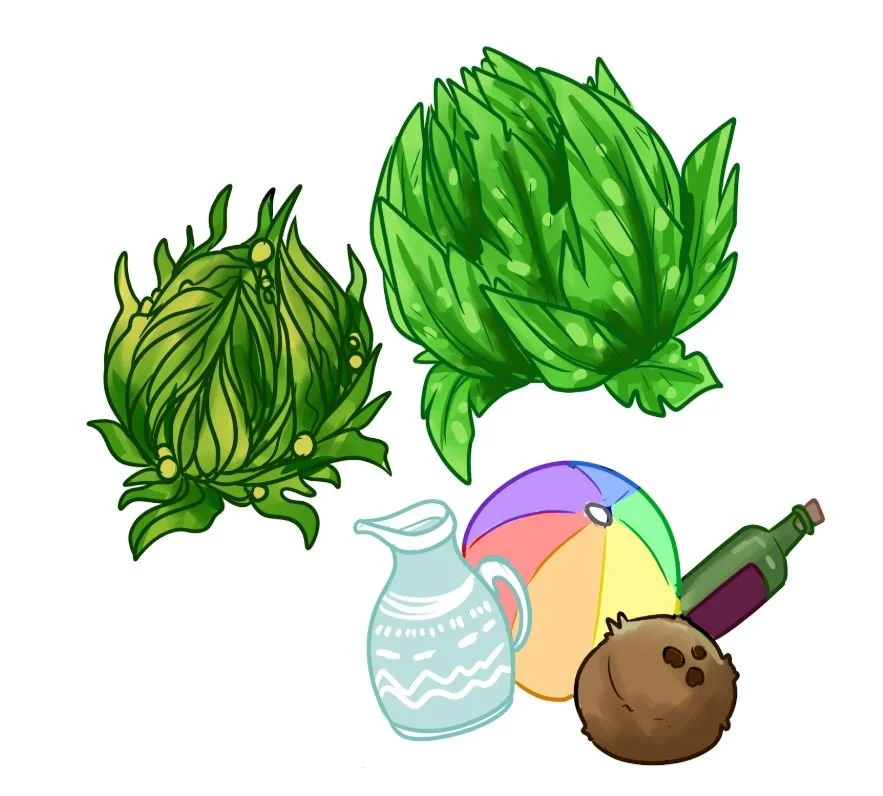
The parents create a vessel to store this newly combined soul safely until it has time to grow and fully develop. This vessel can be made of anything, so long as it is hollow and no smaller than a coconut, often palm leaves or seaweed. It is then placed alongside three other items of the parents choosing to honor their deity. In the case of Elisan and her beachdwellers, objects such as pearls, sea shells, sea glass, and bone jewelry are commonly used. For Yuliasha and her tribals, objects such as gemstones, vibrant feathers, and fruit are used most often. For Melos and his arcanes, objects such as crystals, specially grown mosses, and hand carved instruments are used most often. Minos will stay within the vessel for a one to two month long period depending on the season.
Minos are unable to open their eyes at all within the first three months after ‘birth’ - during which time they rely heavily on their parents and their developing sense of hearing; but they will continue to rely on their parents completely for the first year. Until they become more used to the language of their subspecies, they make a series of soft kitten-like mewls and squeaks, typically speaking the language at around four months. They are much more fluffy than their parents, having a much lighter coat of fur that acts more like a lifejacket which prevents them from sinking into the water for the first year of their life. They will then shed that fluffy coat, in exchange for their waterproof ‘adult’ coat. This is consistent regardless of whether the mino is a beachdweller, tribal, or arcane.
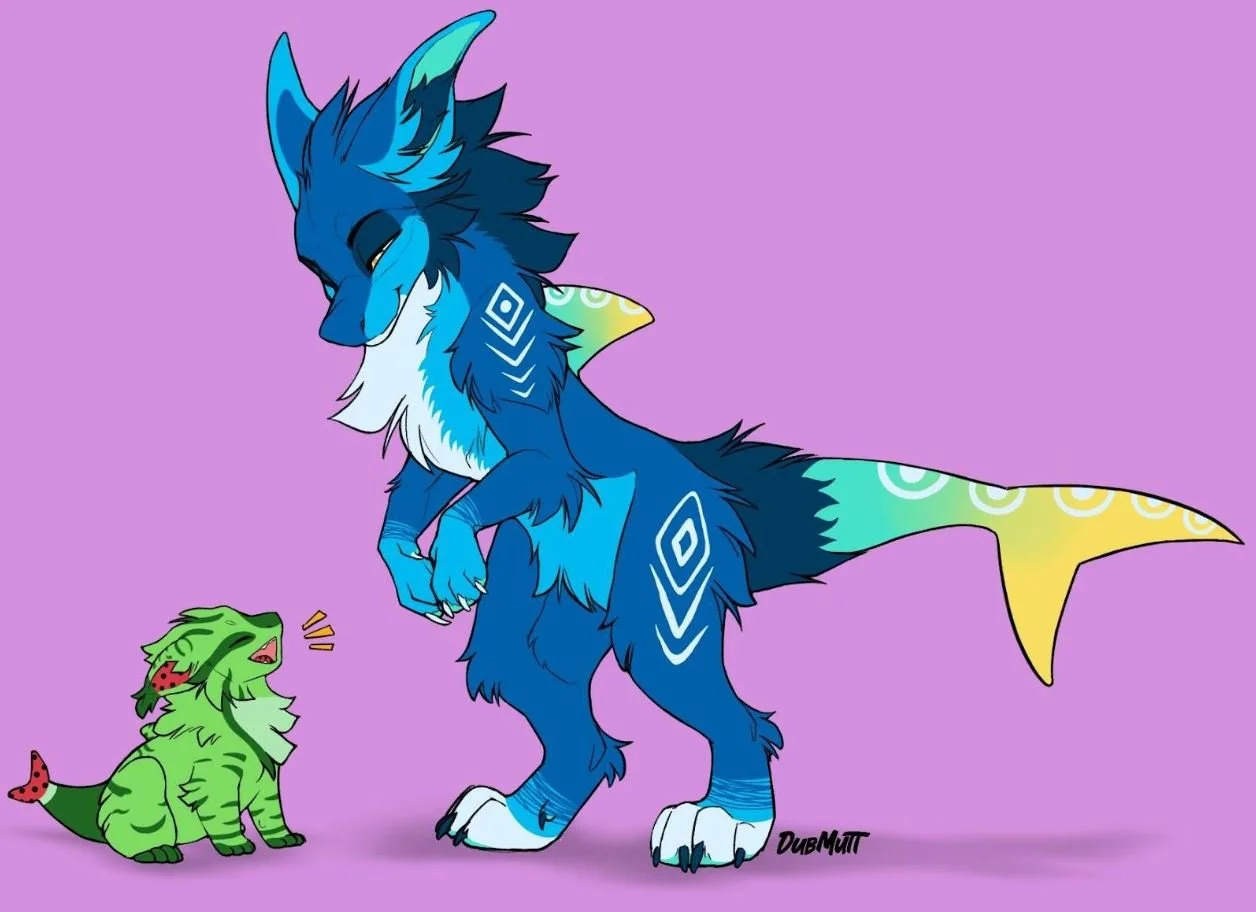
Lineart by Dubmutt, colored and owned by Jashin325
In couples where both parents are the same subspecies the mino will always be the same species; however when you have a set of parents of different subspecies interesting things can occur. Being able to receive a blessing from any deity means the choice falls to the trio alone, although this can be slightly swayed by the items placed alongside the vessel. Although rare, they will occasionally bless the little one with features of multiple sub species. This means a beachdweller could have the fur length of an arcane, or a tribal with extra fins like a beachdweller. Though this does not mean they would gain the major magic abilities of the other side; such as a beachdweller being able to change form or a tribal to do magic like an arcane. More often than not, having traits of another subspecies has a negative effect on the manokit. Tribals are not designed to have long heavy tails like beachdwellers. Beachdwellers can be weighed down by the long fur of an arcane. Each subspecies is uniquely designed to suit their environment by the gods and goddesses, blending them is sometimes frowned upon as it puts the safety of the mino at risk.
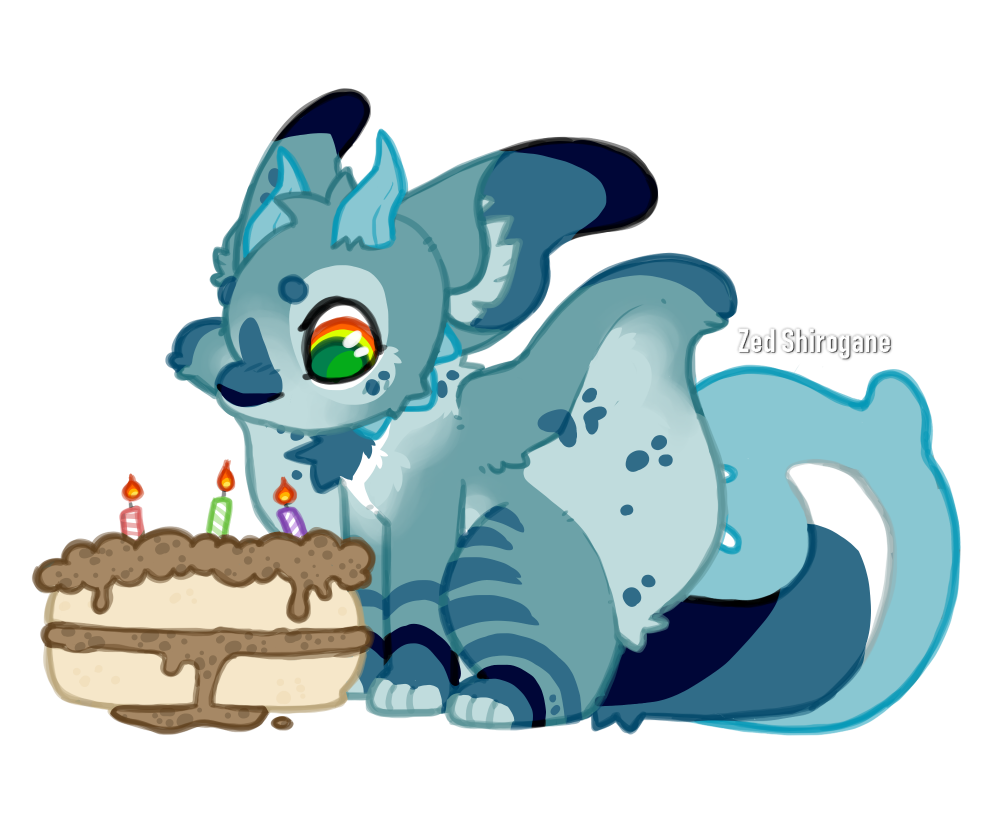
Twins are also possible, though such a birth is considered very rare and something to be celebrated due to the risk of creating even one mino. Often having a two day long festival just to celebrate such an event. It's said that one in every hundred births could potentially result in twins. This does have its own set of issues, however. Although they age and grow at the same rate, with the same health as a normal mino, the same cannot be said for their magic. Most commonly, their magic will be split between the two siblings, resulting in more time being needed to learn how to use it, another 2-3 years at most. Occasionally however, one of the twins will excel in their magical abilities, while the other does have a harder time, or one twin may even have no abilities at all.
Credits and Acknowledgements
This edition of the manokit species guidebook was created by Crucis and Jashin325, as well as edited by Zed Shirogane, as of early 2024. Artwork was done by Zed Shirogane, WolfiesWildCreations, and DubMutt.
We would like to extend our acknowledgement to DubMutt for the original creation of the manokit species. It is essential to note that ownership of the manokit species has since been transferred to Crucis/Loki as of 2019, following DubMutt leaving the fandom. While DubMutt will forever be associated with the inception of the manokit species, it is important to clarify that they are no longer in charge of or have any involvement in any decision-making processes related to the species. The manokit community now looks to Loki and Jashin325 for guidance and leadership, ensuring the continued growth and development of this beloved species. Moving forward, we strive to foster a positive and inclusive community dedicated to the continued enjoyment and exploration of the manokit lore.